 20 August 2026
 Lilian Vermeer
 Single-Use Event / Dr. Ing. Michel Eppink
Bridging academia and industry to shape the future of biomanufacturing
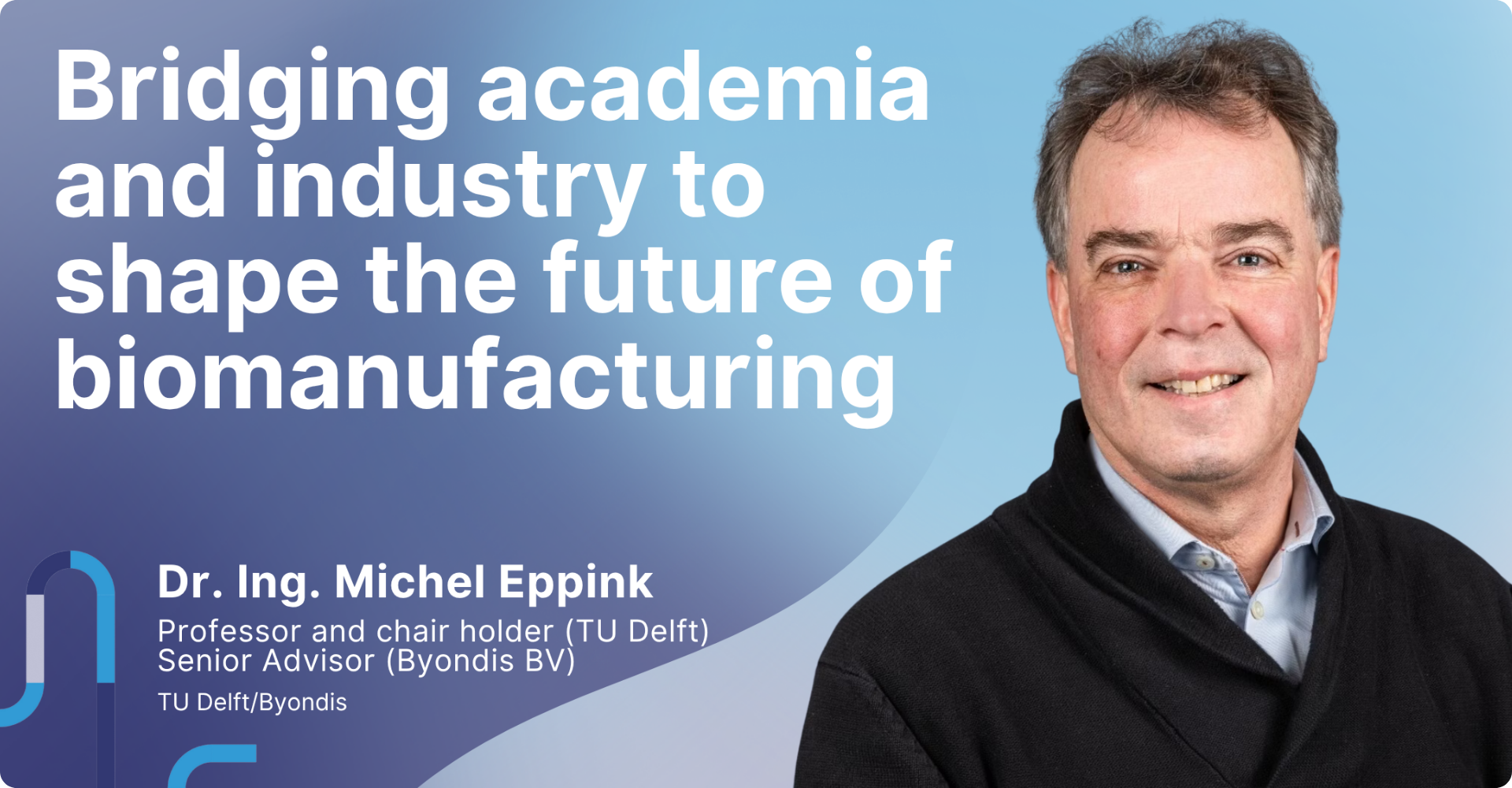
Developing highly efficient production processes for biopharmaceutical products is the ambition of Professor Michel Eppink. To achieve this, he aims to gain a deeper understanding of the entire biomanufacturing process at the molecular level, from protein expression to the final product, with a strong focus on sustainability. Since July 1st, he has been a full-time professor at TU Delft, with a focus on Industrial Biopharmaceutical Downstream Processing and chairholder of the Department of Biotechnology, faculty of Applied Sciences at TU Delft. Next to management tasks it allows him to devote time to research and the development of new technologies.
"I have always been fascinated by unravelling new problems and conducting research," says Eppink. After completing his PhD in Biochemistry, however, he joined industry, first at Organon and later at Byondis (formerly known as Synthon). He remained closely connected to academia throughout his career. From part-time Professor of Bioprocess Engineering at Wageningen University (2014-2024), he became a part-time professor at TU Delft in 2024 alongside his job at Byondis. As of July 1st of this year he is a full-time professor and remains affiliated with Byondis as a senior advisor. Eppink: “The combination works very well because you can develop new technologies, but they also have to be applicable in practice. By working in a biotechnology company, you get a good view of what is really needed in practice. Companies often do not have the time to conduct fundamental and/or in-depth research, but they can benefit from what is developed at the university.”
Scaling up
An important aspect when developing a production process is keeping scalability in mind from the beginning, Eppink believes. “It is especially important not to make processes too complex. Such a process might work fine on a lab scale, but whether it is also feasible on a larger scale under GMP conditions is not always certain.”
“If you operate commercially on a large scale and consistently produce the same product, stainless steel can still be a fine solution”
Single-use
Eppink has also seen the growing adoption of single-use technology in biomanufacturing. “If you operate commercially on a large scale and consistently produce the same product, stainless steel can still be a fine solution”. When producing small clinical batches of different products, processes can be adapted much more quickly and flexibly with single-use technology.
“When using single-use technology, however, you do have to take extractables and leachables into account: chemical substances that can migrate from plastic parts, especially when non-aqueous solutions are used. These substances should not end up in the final product. Single-use also generates a lot of plastic waste. Ideally, bio-based materials should be developed that are recyclable or reusable, but unfortunately, we are not there yet.”
Continuous processing
One of the topics Eppink wants to work on in Delft in the coming years is the development of a complete continuous processing system. By linking multiple process steps together into a single uninterrupted workflow, productivity per unit volume can be increased, allowing smaller equipment to be used. In other words, the process can be downscaled. “Up until now, most processes are actually semi-continuous,” says Eppink, “you still rarely see truly continuous systems on a large scale.”
This is mainly because individual unit operations often operate at different flow rates. As a result, intermediate surge tanks or hold vessels are still required to buffer material between process steps.
“With these data, you can build process models and digital twins that predict how a bioprocess will respond to changes in operating conditions”
The increasing availability of process data is making the creation of a truly complete continuous system much more feasible. “With these data, you can build process models and digital twins that predict how a bioprocess will respond to changes in operating conditions”, says Eppink. “However, such models are only as good as the data they are based on. This is where Process Analytical Technology (PAT) becomes essential. Ultimately, the goal is a fully continuous process with real-time insight into both process inputs and outputs.”
Future
Eppink hopes that further downscaling will become possible in the coming years. "If we can achieve even higher cell densities and product expression levels, manufacturing can become more continuous while shortening overall process times. At the same time, we need to make these processes more circular and sustainable."
About Michel Eppink
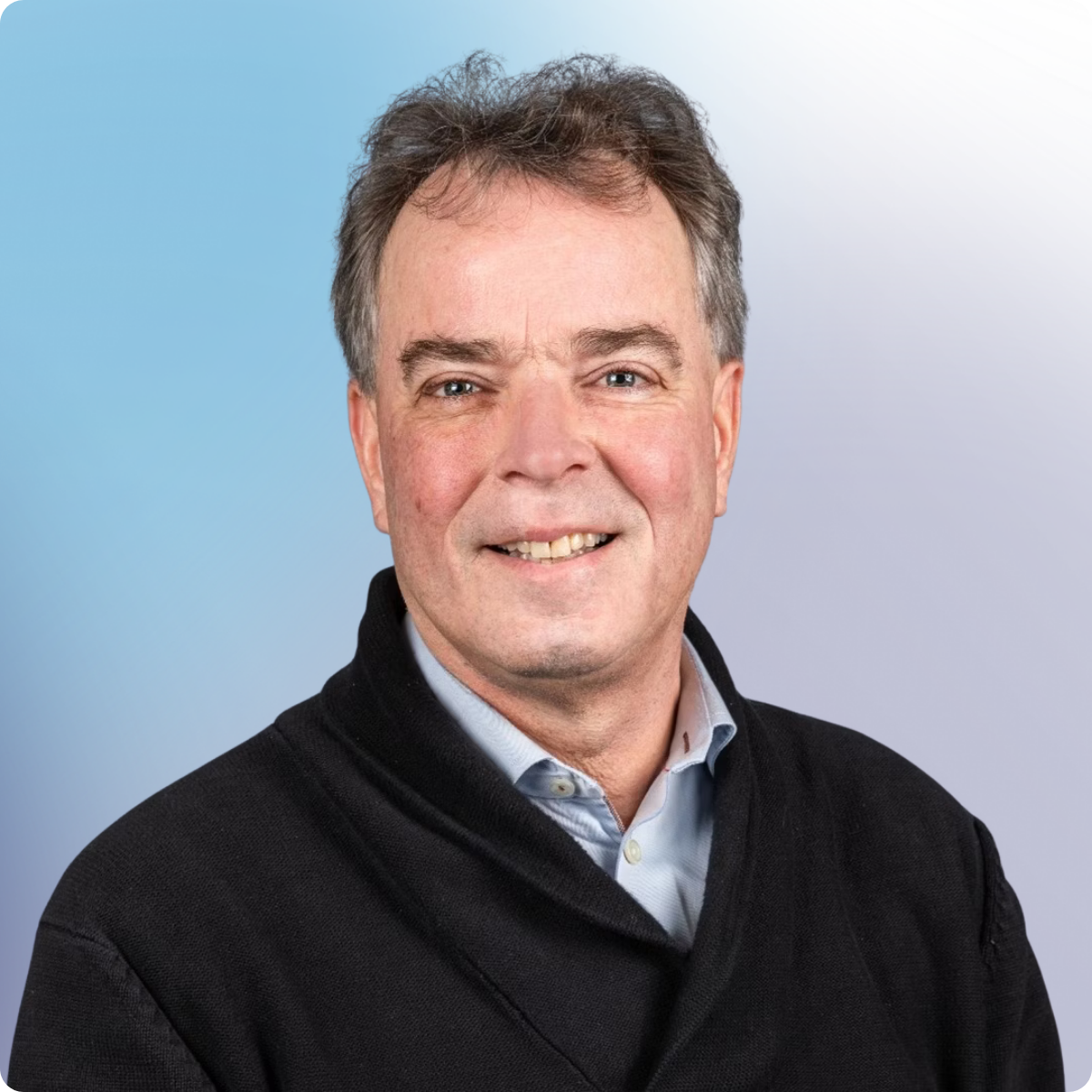
Dr. Ing. Michel Eppink is an experienced Director with a demonstrated history of working in the biopharmaceutical industry. He is a strong professional skilled in Research and Development (R&D), Protein Chemistry, Life Sciences, Downstream Processing, Biorefinery, Biochemistry and Formulations.
Partners of Single-Use Event Leiden 2026

Single-Use Event Leiden 2026
 Registration website for Single-Use Event Leiden 2026
Single-Use Event Leiden 2026marketing@aleapublishers.nl
Single-Use Event Leiden 2026marketing@aleapublishers.nlhttps://www.single-use.nu/170266
2026-09-15
2026-09-15
OfflineEventAttendanceMode
EventScheduled
Single-Use Event Leiden 2026Single-Use Event Leiden 20260.00EUROnlineOnly2019-01-01T00:00:00Z
To be announcedTo be announced
event registration made easy
aanmelder.nl is the software partner for events.
Click here to discover the software.